Sponsors

Book Review

Legend of the Black Roses (Black Rose, #1)Legend of the Black Roses by D. C. Cowan
My rating: 5 of 5 stars

I bear the same name as the author, but I'm actually not the real author of the Legend of the Black Roses. It was written over thirty years ago, but was never published by the author. The story is very unique in many ways. It's hard to find a book that's similar to it, at least within the books written by and about African Americans. I compare it to the book Kindred, not because the stories are similar, but by what they portray. Kindred tells the world what would happen if a modern African American female was taken from her life and sent into the past. But what if an African princess was ripped from her homeland, forced into slavery, and is somehow lost in time as well. This is the real mystery of the story. How does the spirit of an African princess become a disembodied spirit? Don't worry; I haven't spoiled anything with this review. This answer isn't revealed in the first novel anyway. There are many twists and turns in the first novel and hopefully the series to come that keeps the story interesting.

View all my reviews
Showing posts with label African Americans. Show all posts

Thursday, January 23, 2014

Africana History Fact


 Ralph David Abernathy


Ralph David Abernathy

(1926-1990), American minister and civil rights leader who organized nonviolent resistance to segregation and succeeded Martin Luther King, Jr. as president of the Southern Christian Leadership Conference (SCLC).

Ralph Abernathy was born on March 11, 1926, in Linden Alabama, to William and Louivery Abernathy.  He earned a B. S. from Alabama Stage College and was ordained a Baptist minister in 1948.  In 1951, he received an M.A. in sociology and became pastor of First Baptist church in Montgomery, Alabama.  He and Martin Luther King, Jr. led the successful boycott of the Montgomery bus system in 1955, protesting segregated public transportation.

In 1957 Abernathy helped King found the Southern Christian Leadership Council (SCLC) to coordinate nonviolent resistance to segregation.  After King's assassination in 1968, Abernathy served as SCLC president until he resigned in 1977.


Source: Africana: The Encyclopedia of the African and African American Experience, (1999)  Edited by, Appiah, Kwame Anthony, & Gates, Henry Louis.

Sunday, January 19, 2014

DC's Poetry Corner

Alvin Ailey's "Cry"

Why do you cry?

Why do you cry?
Is it that the world has done you wrong, 
Or, have your wronged yourself?

Why do you cry?
Is it that love has failed you,
Or have you failed to love?

Why do you cry?
Is it worth the tears you shed?
Are the tears you shed worth it?
Do you know why you cry?
Or, do you cry because you don't know why?
Tell me,
Why do you cry?
If you can...


Text Copyright © 1962-2014 by D. C. Cowan

Quote of the Week

Maya Angelou


Maya Angelou

Friday, January 17, 2014

Africana History Fact


Kareem Abdul-Jabbar


Kareem Abdul-Jabbar

(1947-Present) American basketball player, widely considered to be one of the greatest National Basketball Association (NBA) players in history.

Kareem Abdul-Jabbar, the highest scorer in NBA history, was born Ferdinard Lewis Alcindor Jr. in Harlem, New York.  After being influenced by the Black Power movement and becoming a political activist he changed his name to Kareem Abdul-Jabbar.  Raised in a middle-class household and educated at Catholic schools in Manhattan, he was introduced to basketball at age nine and played competitively throughout elementary school and high school.  At the age of 14 he was already six feet eight inches.  He led his high school to two victories in the city championship.  He was popular NBA star from 1969 to 1989.  He devastated opponents with his legendary "skyhook" shot.  For twenty years he had a career in professional basketball, playing on 18 all-star teams, six MVP awards, six championships and much more.

Abdul authored the book entitled Black Profiles: A Legacy of African American Achievement in 1996.


Source: Africana: The Encyclopedia of the African and African American Experience, (1999)  Edited by, Appiah, Kwame Anthony, & Gates, Henry Louis.

Thursday, January 16, 2014

Africana History Fact


Francis Bedford: Portrait of ‘Abd al-Qadir, Damascus, April 30, 1862


Abd al-Qadir

(1807-1883) Algerian religious and military leader credited with unifying Algerian territory into a state through his campaign against French Colonization.

Considered a hero of anti-colonial resistance by many contemporary Algerians, Abd al-Qadir created an Arab-Berber alliance to oppose French expansion in the 1830s and 1840s.  He also organized an Islamic state that, at one point, controlled the western two-thirds of Algeria's inhabited land. 

Abd al-Qadir's ability to unite Arabs and Berbers owed in part to the legacy of his father, the head of the Hashim tribe in Mascara and leader of the Qadirayya regional political body, which opposed the Turkish sultanate.  As the French expanded westward into territories of Algeria, in 1832 Abd al-Qadir led attacks on French-occupied Oran, taking the city within six months.  In 1837, the French signed the Treaty of Tafna with Abd al-Qadir, acknowledging his sovereign authority over an area encompassing two-thirds of Algeria.


Source: Africana: The Encyclopedia of the African and African American Experience, (1999)  Edited by, Appiah, Kwame Anthony, & Gates, Henry Louis.

Tuesday, January 14, 2014

Africana History Fact

James Baldwin

James Baldwin

(1924-1987) African American novelist, essayist, playwright, and poet known to many as one of the best American thinkers in the 20th Century.

Popular quote:
"We are responsible for the world in which we find ourselves, if only because we are the only sentient force which can change it."  James Baldwin collection of essays, No Name in the Street.

He was born in Harlem in 1924.  His mother married a Pentecostal Minister with him had seven other children younger than Baldwin.  Baldwin had an early beginning with the joy of writing as he became the an editor for the Frederick Douglas Junior High School paper and literary club.  The tragedy of losing his stepfather and the Harlem Riots in 1943 spurred Baldwin to work more diligently at his writing career.  Baldwin used his writing as a means to communicate the injustice in America and help people see a way to make it better.  He published his first essay, Nation in 1946.  Later he published more essays such as New Leader, Commentary, and Partisan Review and his first book Go Tell it on the Mountain.  He is best known for his works Notes of a Native Son, Nobody's Knows My Name, and The Fire New Time which established Baldwin as a prominent American writer.

Quote of the Week


James Baldwin


JAmes Baldwin

Monday, January 13, 2014

African American Book Review


"Kindred": Octavia Butler

Kindred by Octavia Butler

Synopsis: Dana, a modern black woman, is celebrating her twenty-sixth birthday with her new husband when she is snatched abruptly from her home in California and transported to the antebellum South. Rufus, the white son of a plantation owner, is drowning, and Dana has been summoned to save him. Dana is drawn back repeatedly through time to the slave quarters, and each time the stay grows longer, more arduous, and more dangerous until it is uncertain whether or not Dana's life will end, long before it has a chance to begin.

Review 1: 5 out of 5 stars, Called "A masterpiece from one of the essential sci-fi writers"
Octavia Butler's "Kindred" is a novel which fits into many literary niches. It could be seen as a milestone in both African-American literature and science fiction; it's also a novel with a lot for feminist readers and critics. But ultimately the power of this book allows it to transcend all labels. "Kindred" tells the story of Dana, a 20th century African-American woman who is married to a white man. Throughout the book Dana is mysteriously thrust back and forth in time between her world and the world of her ancestors in the 19th century. She seems to be tied to one ancestor in particular: Rufus, the white son of a slaveowning family. Part of Dana's struggle is to deal with the utterly alien world of Rufus' slaveowning culture.Butler brilliantly weaves many powerful themes into this gripping story: violence, sexual desire, race, literacy, language, law, and education. The story is peopled with well-developed characters who have complex, interconnected relationships. Butler vividly evokes how the slave system both physically brutalized blacks and psychologically warped whites.Butler's prose is lean and muscular. She grips you from the stark opening lines: "I lost an arm on my last trip home. My left arm." The story is richly ironic and heartbreaking. 

Review 2: 2 out of 5 stars, Called it "Good concept, but boring."
When I first started reading this book I really liked it. I liked the premise and how quickly the story was moving. But then it hit a brick wall from there. I feel as if nothing happened in this book and the story just stood still. I wanted to finish the book just to see what would happen and I was sadly disappointed when nothing really did.  The author had a good concept but fell short once it came to the telling of a good story.

Source: Amazon.com/Books

Friday, January 10, 2014

Africana History Fact of the Day


On May 5, 1905, Robert Sengstacke Abbott founded the Chicago Defender with an initial investment of 25 cents and a press run of 300 copies. Five years later, the Chicago Defender began to attract a national audience and had a major influence on the Great Migration, culture, and the struggle for civil and human rights.


Robert Sengstacke Abbott (1868-1940)


African American founder, editor and publisher of the Chicago Defender.

Abbott was the son of former slaves.  He learned the publishing business from Hampton College and became a lawyer for some time after graduating from Kent College of Law.  He founded the Chicago Defender in 1905.  The paper was used as a protest against racism and became very popular in the African American community.  He used the paper as a means to fight against police brutality and other issues relevant in the black community.  On the side he was also active in many civic organizations like the Chicago Commission on Race Relations.

DC's Poetry Corner

 What times are these?


What times are these
When evil prevails
When righteousness leaves
And good fails
When men must die
For doing right
And you and I
Must fear the night

These, these are times of woe
Of man against man, forever more
Stop, stop for dignity
And become a complete humanity


Text Copyright © 1962-2014 by D. C. Cowan

Thursday, January 9, 2014

Africana History Fact of the Day


Diane Abbott 


Diane Abbott

 (1953-Present) The first black female to be elected as a member of the British Parliament.
 A graduate of Cambridge University, Abbott came from a working class family in London.  She joined the Labour Party at the age of eighteen.  After graduating from college she worked for many years with a department of the government that oversaw many domestic issues.  Afterwards she became the first black to work for the National Council for Civil Liberties.  She won a seat with the Westminster council in 1982, joined parliament in 1985 and became one of four percent of women who serve in elected office in Britain. Other blacks soon took office in 1987.  Now, she has made history for being the first black to serve in office in the British Parliament and has become a controversial figure because of her protests against racism and other political views. 

Wednesday, January 8, 2014

Africana History Fact of the Day

American Civil War Photos: African American Slavery Picures and Images 

Abakuas

Secret society of African peoples who were enslaved in Cuba.

In the mid-19th century, thousands of Africans were brought against their will from territories in Nigeria to the sugar plantations of Cuba.  Though enslaved, they did not abandon many traditions of their culture that they had in Africa.  They continued to form all-male organizations that oversaw traditions in religion, music and dance.  They called these groups, Abakuas.  Today the Abakuas can be found in places like the city of Havana.  They held on to their language from the Calabar region of Nigeria called Ibo and used it to preserve the traditions of their people.

Tuesday, January 7, 2014

DC's Poetry Corner


The Lord Will Take You As You Are


If you are...
              singing,
              praying,
              serving,
              saying,

I'm fighting for the name of the Lord.

Then no one could ever jude you
by the color of your skin,
by the texture of your hair,
by the shape you're in...

No, no one could ever deny
That you are free from all sin,
When the Lord has taken you in.

Text Copyright © 1962-2014 by D. C. Cowan

Sunday, January 5, 2014

Quote of the Week


Just because I loves you—
That's de reason why
Ma soul is full of color
Like da wings of a butterfly
Just because I loves you
That's de reason why
My heart's a fluttering aspen leaf
When you pass by.
Langston Huges (1902-1967) "Reasons Why" (complete poem), 1922, The Collected Poems of Langston Huges, ed. Arnold Rampersad and David Roessel, 1994.

Legend of the Black Roses Giveaway

Congratulations to the GoodReads Winner!


Vanessa is the winner of the GoodReads Giveaway for the Legend of the Black Roses.

Congrats Vanessa!


Goodreads Book Giveaway

Legend of the Black Roses by D.C. Cowan

Legend of the Black Roses

by D.C. Cowan

Giveaway ended January 03, 2014.
See the giveaway details at Goodreads.


Note:  Are you curious about or interested in Legend of the Black Roses?  You can still enter another giveaway coming February 2014.  Visit the website below in February.
bookaholicsromancebookclub.weebly.com/ 

Saturday, January 4, 2014

African American Book Review


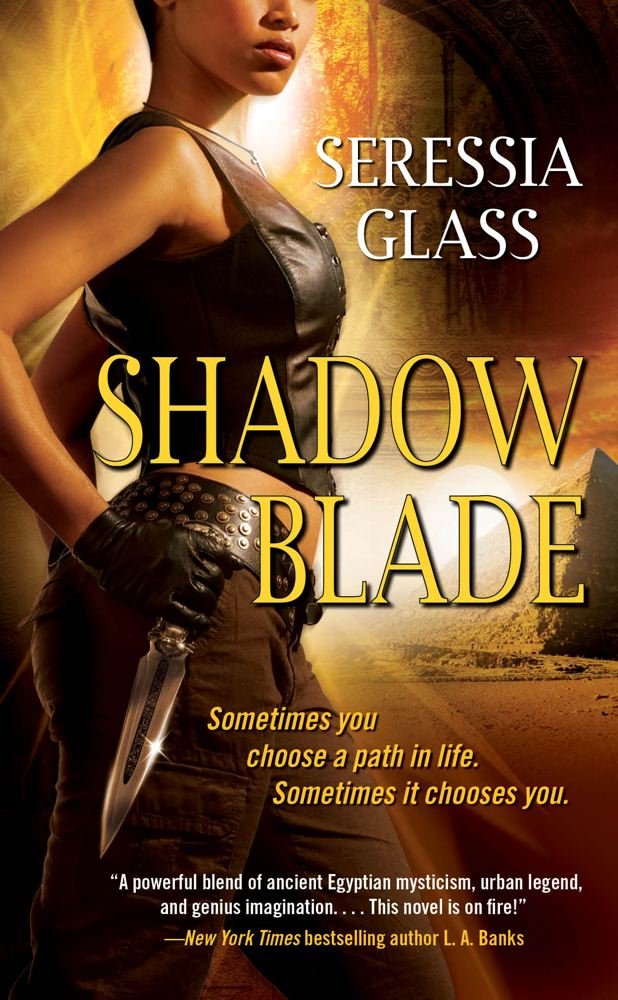
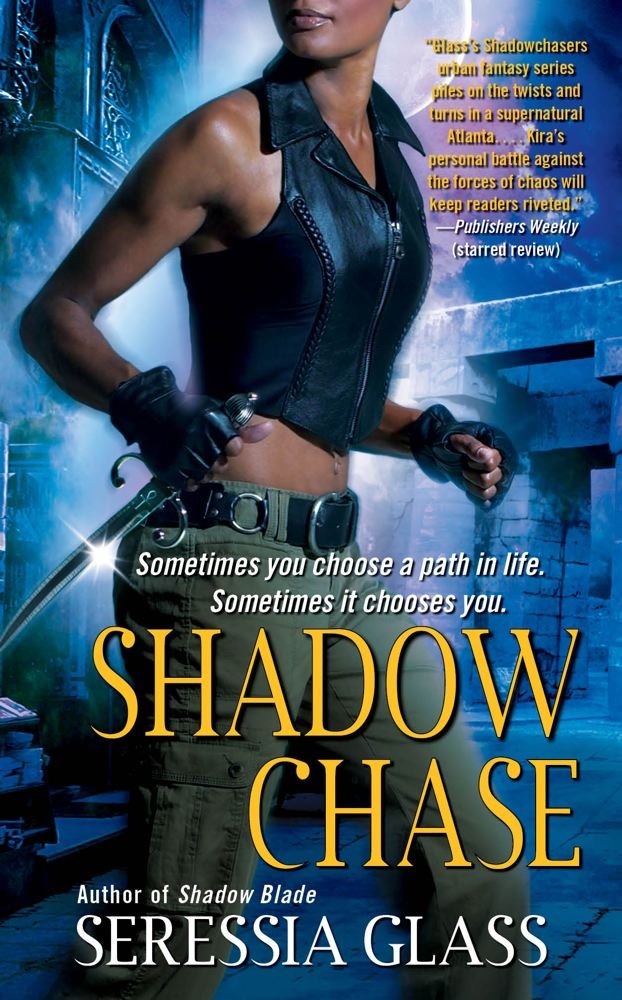
I read a glowing review about this trilogy a while back and it mention how there aren't all that many fantasy novels with action and adventure that have a strong Black female lead.  Supposedly publishers are looking for more books like this from authors.   This book series caught my attention once again because of the cover pictures.  It's not very often that you see a powerful African American woman who looks like she can kick someone's butt on the front cover of a book.  And just by looking at the covers you can tell this is an adventure series with strong Black female leads.  There's a lot of Egyptology in the books as well which is appealing to people who are into mythology.  Here some reviews for book one that I have listed below.


5 out of 5 Stars - Richly Imagined and Thorough Urban Fantasy Series Debut
By Tracy: The first thing I did when I finished reading Shadow Blade earlier this morning was make sure that my memory was correct, and that it was the beginning of a series and not a standalone novel. Not because I didn't like how it ended, but because I was so impressed with Seressia Glass' fully developed and vibrant world rich with ancient Egyptian and Africa history, not to mention the three dimensional characters, zippy narrative, and intriguing plot.  I'm thrilled to say that Shadow Blade hit all my happy spots. All of them. I loved it.  I'm not going to summarize the plot here, as it's been done sufficiently in the product description and in more depth in other reviews. I just need to express what I most enjoyed about it. I loved the setting, Atlanta. I was really impressed with the flawless blend of history and mythology that never - for me - bogged down the story or stuttered the plot. I found the lead character, Kira Solomon, to be a stunning blend of intelligence, confidence, and aptitude with her work (both jobs), devotional commitment to her calling, and refreshing innocence and sense of yearning with everything else. Some reviews have criticized that dichotomy, but for me, it made perfect sense. The poor girl has been able to touch exactly NO ONE in her entire life without it ending in coma or death or pain. Twenty-six years of complete physical solitude unless she's killing. The wounds on a person's psyche under those conditions are unimaginable, horrifying, and entirely well represented by Kira's responses to events in Shadow Blade. I believed it utterly and I sympathized completely with her, as my admiration for her as written grew and grew. And kudos to Glass for the masterful development of Kira through the arc of the story.
 
2 out of 5 stars Wow. This story needs a better editor.
By Amazon Customer: I should start this off by saying that the characters and the setting reminded me strongly of the Kate Daniels series... and that is what lead to my great disappointment with it. Kate Daniels series is great. This is very very mediocre. The writer just talks too much. And says nothing of import. I couldn't help but re-write sentences, paragraphs and even entire scenes in my head. There was so much extraneous STUFF that had no purpose. And everything is explained in great detail-- even when it really doesn't need to be.There was a lot of potential here but the execution isn't at all up to par. Another issue is the 'big bad opponents'... the half breeds are idiots, the "OMG I'm can't believe it's a SEEKER DEMON!" is defeated entirely too easily and wasn't scary at all. In anyway shape or form. Oy. For most urban fantasy heroines the 'biggest bad' in this book-- the creature controlling the seeker demon-- would be just a routine exercise. For example, the first Kate Daniel's book had Kate facing 40 out of control vampires she has to figure out how to control with her mind and then kill them (after defeating their controller)... for a WARM UP to fighting a nasty serial killing creature that can only be killed by a very fragile weapon and a zombie dragon. That's what I call BIG BAD. These were just... remedial not so good guys.  Sorry, the writing needed a heavy editor and the story wasn't believable or consistent and the danger was laughable.


Friday, January 3, 2014

DC's Poetry Corner

African American Angels | African American Angel 2 large cj 
The Lord will take you as you are...
Be like a babe, that knows no sin;
And the Lord will take you in.
Be like a child, so innocent;
And be ready for the judgment...

For the Lord will take you as you are.

You know the Lord does not judge you
by the color of your skin
by the texture of your hair
by the shape you are in...
As long as you can say
That you are free from all sin
The Lord will take you in.

Copyright © 1962-2014 by D. C. Cowan

Tuesday, December 31, 2013

Africana History Fact of the Day


Sani Abacha (1943-1998)

Was an elite soldier of the Nigerian Military.  He led forces against a tyrant, Shehu Shagari and later on helped put General Ibrahim Babangida as head of state.  This helped pave the way for free elections for the people in the 1990s.  Eventually he, himself, replaced the general as head of state.  He ordered many executions and imprisonment for those who opposed him.  Images could be seen of Abacha everywhere, but he rarely came out into the public eye.  In 1998, Abacha died of a heart attack.

Whether good or bad, the history of all Africans and African Americans is somehow connected and important.

Monday, December 30, 2013

Africana History Fact of the Day

Henry Louis Aaron more commonly known as...

Hank Aaron
Was born from eight children in Mobile, Alabama (that's where my daddy's from).  He started playing baseball with the Negro League and quickly moved up in rank.  The 1950s brought integrated baseball teams and Aaron received his first opportunity to play professionally.  He started out as a shortstop for Milwaukee Braves known now as the Atlanta Braves.  Over his career he hit 755 home runs and surpassed the record of Babe Ruth.  He spent 23 years in his baseball career and is now considered one of the greatest baseball players of all time and thus inducted into the Baseball Hall of fame in 1982.


Sunday, December 29, 2013

Quote of the Week


I am an invisible man... I am a man of substance, of flesh and bone, fiber and liquids - and I might even be said to possess a mind.  I am invisible, understand, simply because people refuse to see me.

Ralph Ellison (1914-1994).  Prologue to The Invisible Man, 1952